


Seagrass
Protecting Our Underwater Forests
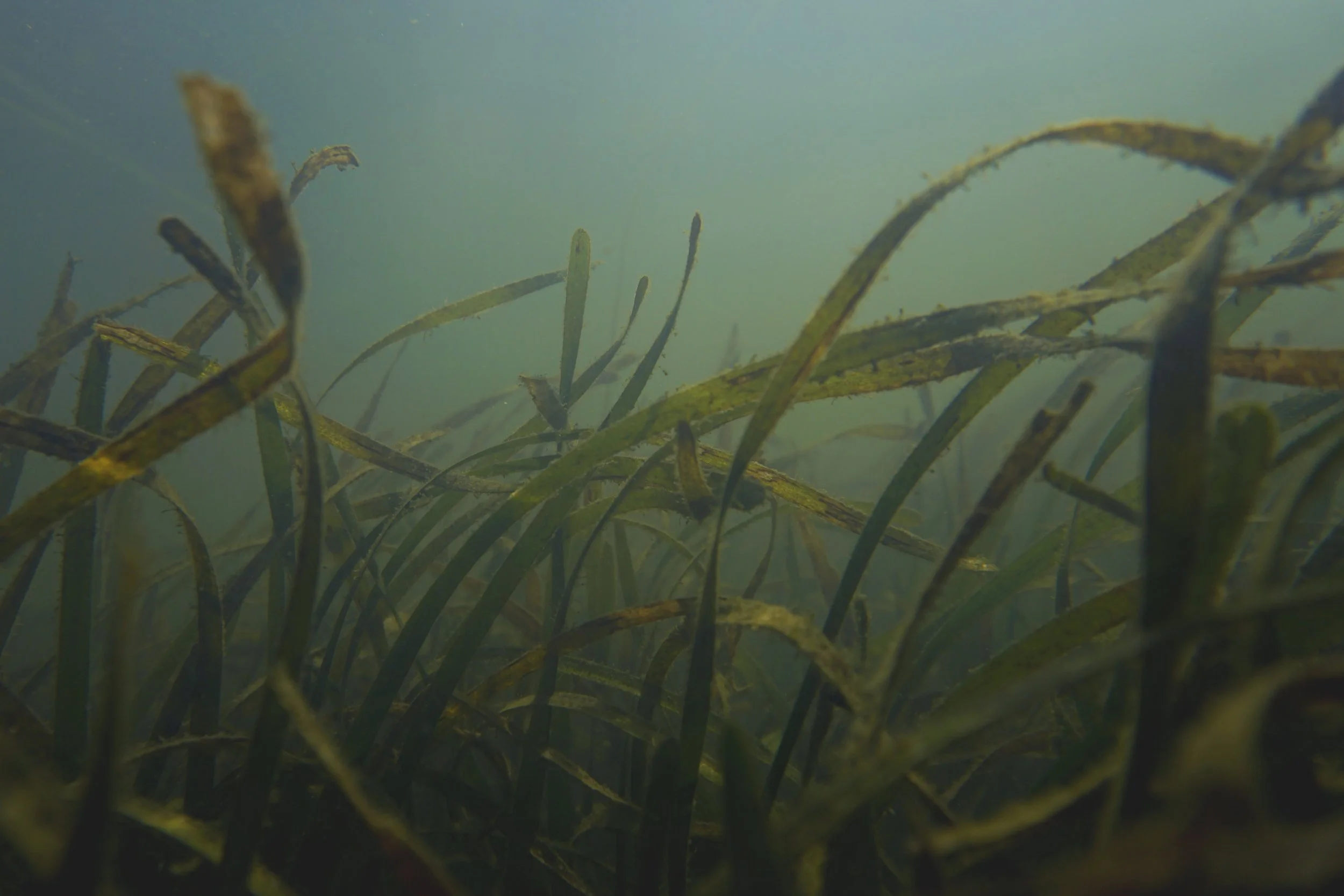
Learn about the fascinating world of seagrasses, the submerged flowering plants thriving in Florida's bays, lagoons, and coastal waters. These underwater forests, reliant on clear waters for light, are not only oxygen producers like their terrestrial counterparts but also form a crucial part of our coastal ecosystem.
Food Source
Seagrass beds are feeding grounds for a variety of species such as the Florida Manatee, various species of turtles, sharks, and rays. These animals forage in the seagrass, feeding on the grass itself or on the smaller creatures that inhabit the grasses.
Marine Nurseries
Seagrass communities serve as nurseries for juvenile fish, crabs, and shrimp that later move offshore, as well as provide habitat for threatened and endangered species such as the smalltooth sawfish.
Nature's Purifiers
Seagrasses serve to improve water quality by reducing nutrients in the water column, and they are important components in energy and nutrient cycles, as well as estuarine and coastal food webs.
Aquatic Homesteads
Seagrass communities in Tampa Bay provide vital habitat for recreationally and commercially important fish and invertebrate species.
Plant Species

Shoal Grass
Halodule Wrightii

Turtle Grass
Thalassia testudinum

Manatee Grass
Syringodium filliforme
Here in Tampa Bay, three species of seagrasses make up the majority of our habitats. These three species are sometimes found mixed together within one area, but typically they compete with each other and are forced to grow in certain areas and depths.
Our Approach
Restoration
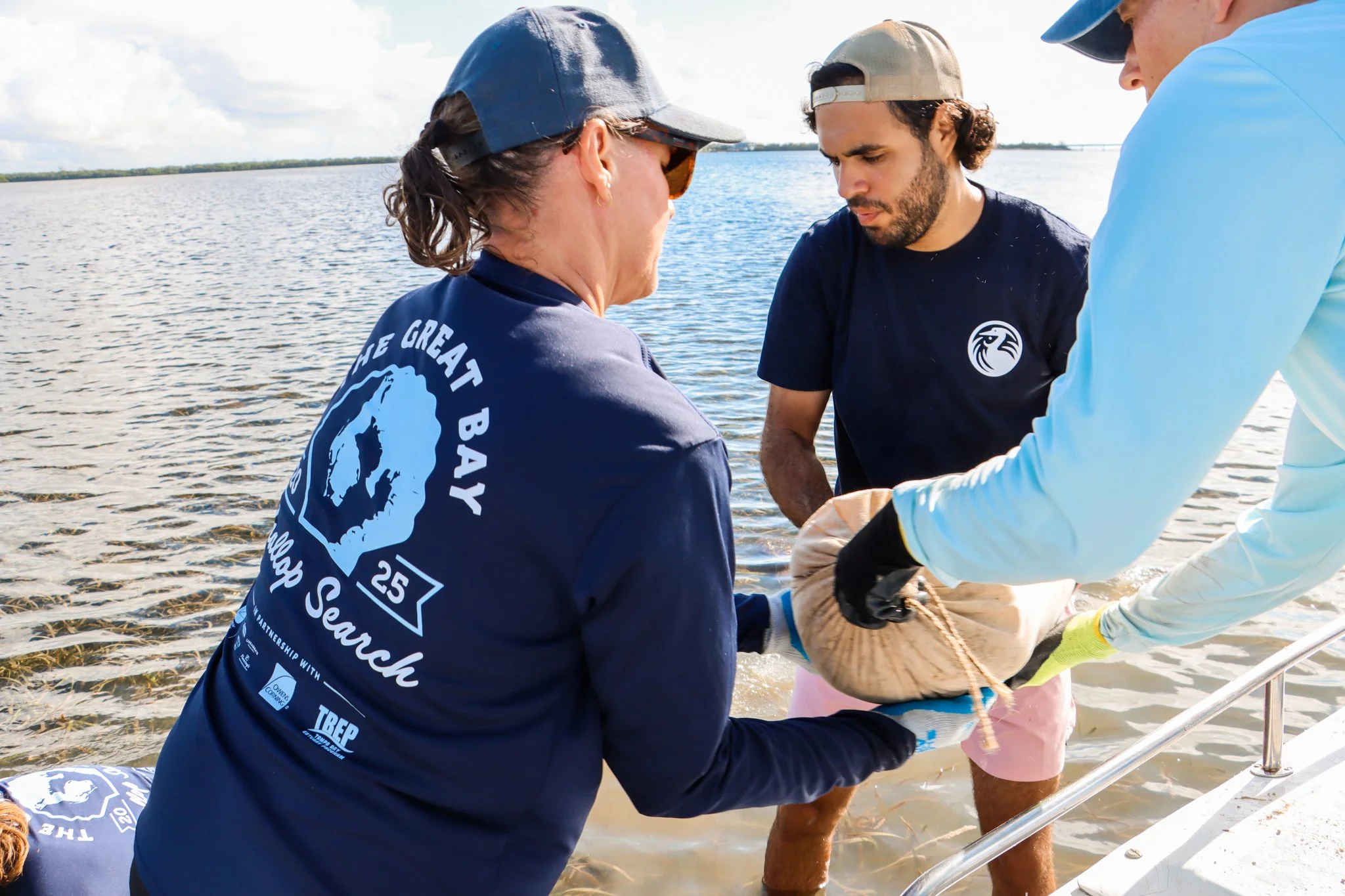
To support the Tampa Bay Estuary Program’s management goal of maintaining 40,000 acres of seagrass in Tampa Bay, it is important to explore opportunities for ongoing seagrass restoration projects, such as Propeller Scar sediment tubes or by pulling grass from a permitted donor area for transplanting into the permitted project area.

Monitoring
Tampa Bay Watch participates as a member of the Tampa Bay Interagency Seagrass Monitoring Program which conducts annual seagrass surveys at about 60 Tampa Bay bay-wide fixed length transects. The program, a joint effort among several Tampa Bay agencies, takes a look at trends of the Tampa Bay seagrass communities at the species level.
Seagrass Success Stories
How biodegradable sediment tubes are helping restore propeller scars in Bunces Pass.

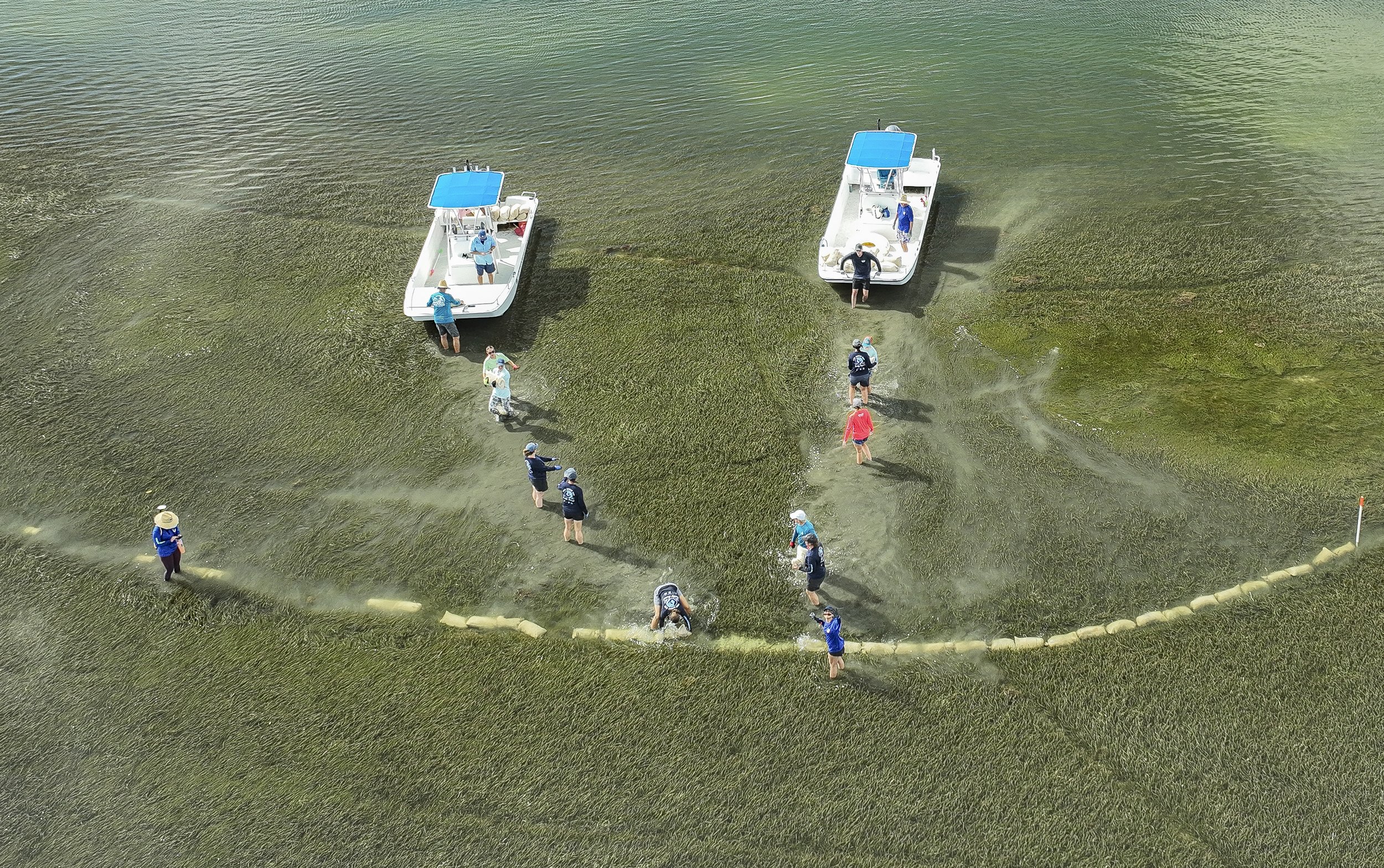
In 2025, our crew made plans to restore deep propeller scars made by recreational boating in Bunces Pass. This two-year effort to install 1,500 sediment tubes and restore approximately 3,000 linear feet of high-priority propeller scars in southern Pinellas County was finished in 2026 thanks to the hard work of our restoration team and dedicated volunteers.
Propeller scars are one of the most significant impacts to seagrass beds in Tampa Bay. The use of sediment tubes raises the damaged area to the elevation of the surrounding bay bottom, allowing for the reestablishment of seagrass at a greatly accelerated rate.
The sediment tubes are biodegradable geotextile tubes filled with clean, sandy soil material. Installed by hand directly into propeller scars, they are designed to elevate the scarred areas to the same level as the surrounding sediments. As the tubes gradually degrade, rhizomes and roots from adjacent seagrass beds begin to spread into the stabilized sediments, recolonizing and restoring the damaged habitat.

PROGRAM SPONSORS
Wolf Family Foundation
Hough Family Foundation
Email Serra Herndon, Habitat Restoration Director, with questions about this program: sherndon@tampabaywatch.org