

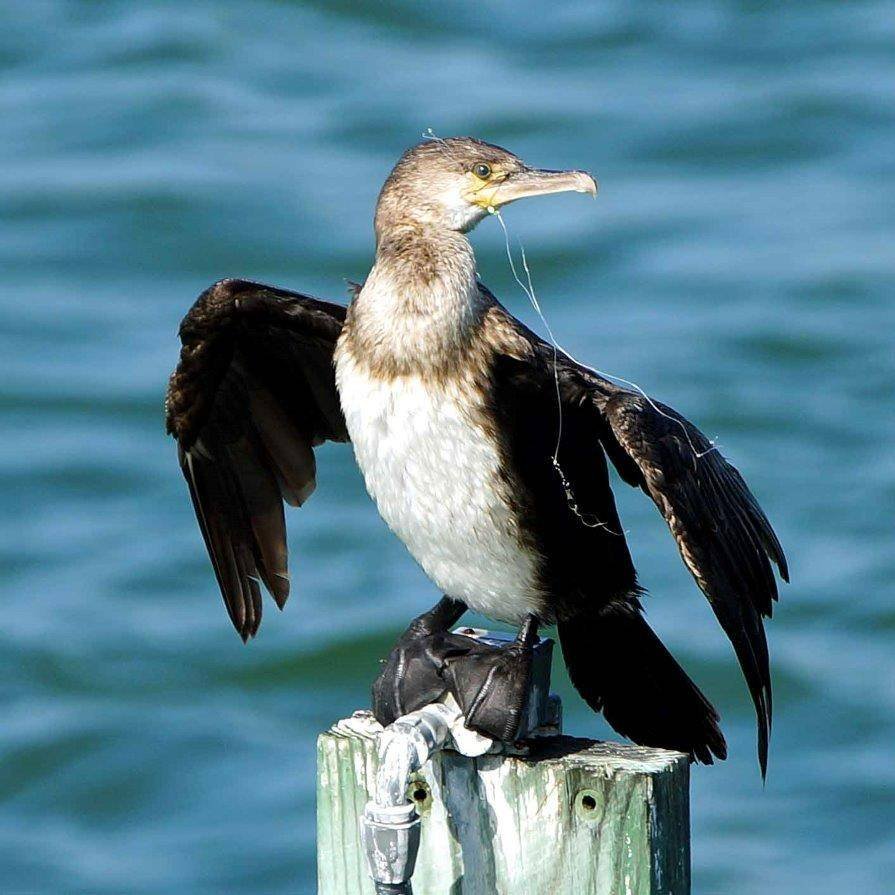
Fishing Line Recycling
Protecting Marine Life Through
Responsible Angling
Tampa Bay inhabitants have a long history of fishing, both commercially and recreationally. To ensure future generations will have the same opportunity to fish our waterways, it’s essential to properly dispose of fishing line and gear.
Impact of Fishing Line


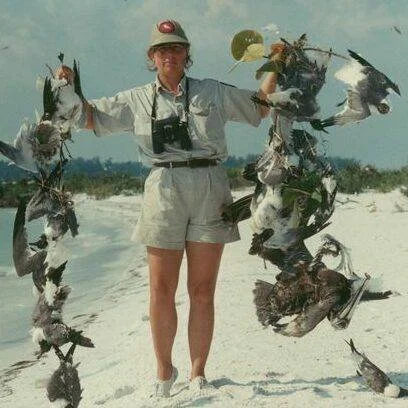

Monofilament or “mono,” is a fancy word for the commonly used plastic fishing line. It has great fishing utility, but can take over 600 years to break down and poses serious threat to birds and other wildlife. Improperly discarded mono and fishing gear leads to wildlife entanglement, accidental hooks, and ingestion.
Monofilament that has been improperly discarded or left in the environment is potentially lethal to our local waterbird population. To combat this threat, Tampa Bay Watch partners with Audubon Florida to host an annual bird island cleanup. This effort targets the removal of fishing line, tackle and other marine debris from known rookery islands around the Tampa Bay watershed. The community volunteer event is hosted prior to nesting season in order to provide safer nesting habitat for breeding and juvenile colonial waterbirds. We also host additional fishing line cleanups as needed throughout the year.
Our Approach
Tampa Bay Watch joins the Florida Fish and Wildlife Conservation Commission in their statewide initiative to recycle old fishing line. The Monofilament Recovery and Recycling Program (MRRP) is dedicated to reduce fishing line environmental impacts by encouraging recycling through a network of monofilament bins and drop-off locations.
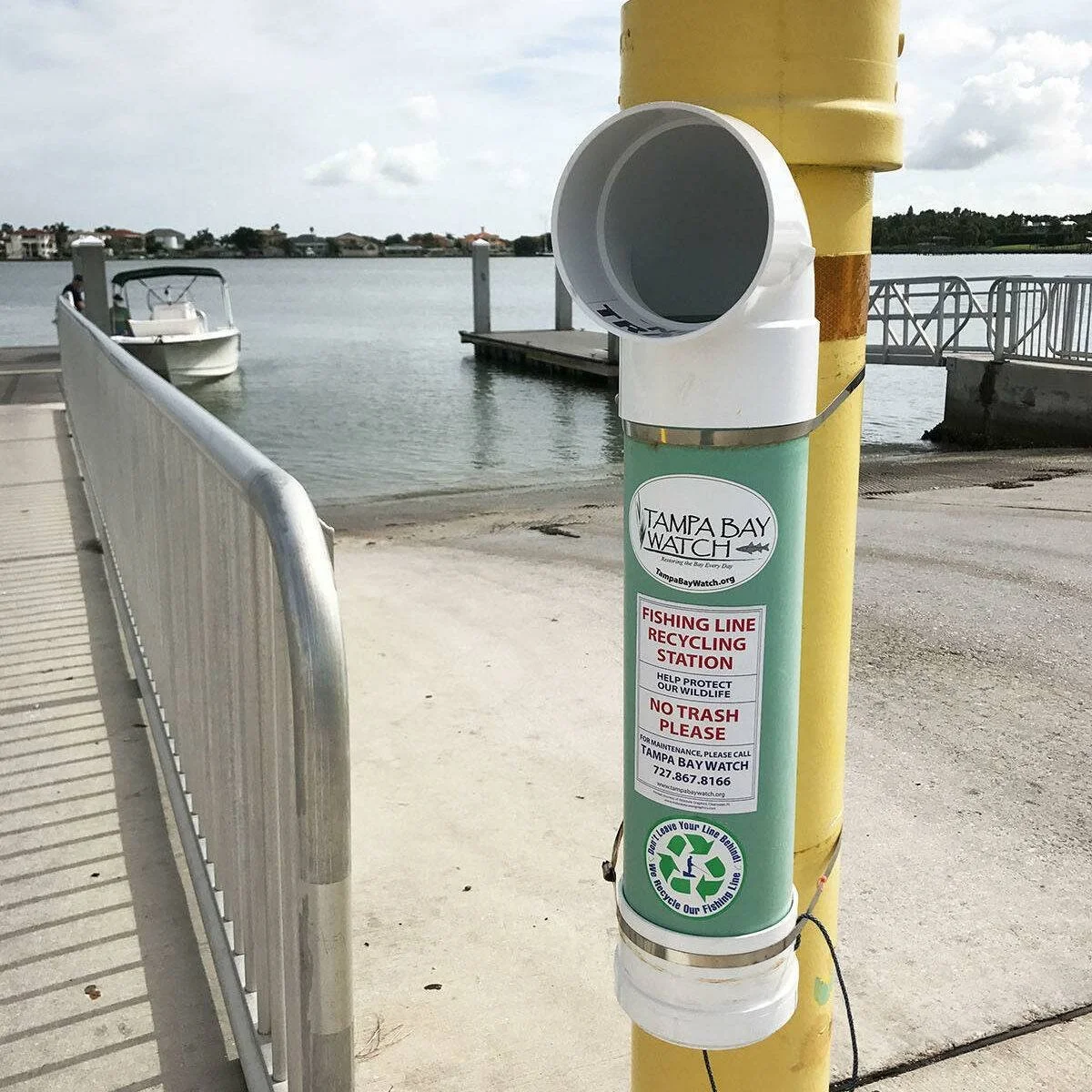
Monotubes
Tampa Bay and the Gulf Coast is home and migration ground for over 40,000 breeding pairs and 25 different bird species that nest annually. In an effort to keep our waterways and bird nesting islands free of mono, staff and community volunteers manage 200+ “monotubes” (fishing line recycling bins) and host mono clean-a-thons a few times a year.
ADOPT A MONOTUBE
How does it work?

Adopt
Community members adopt a monotube in their neighborhood
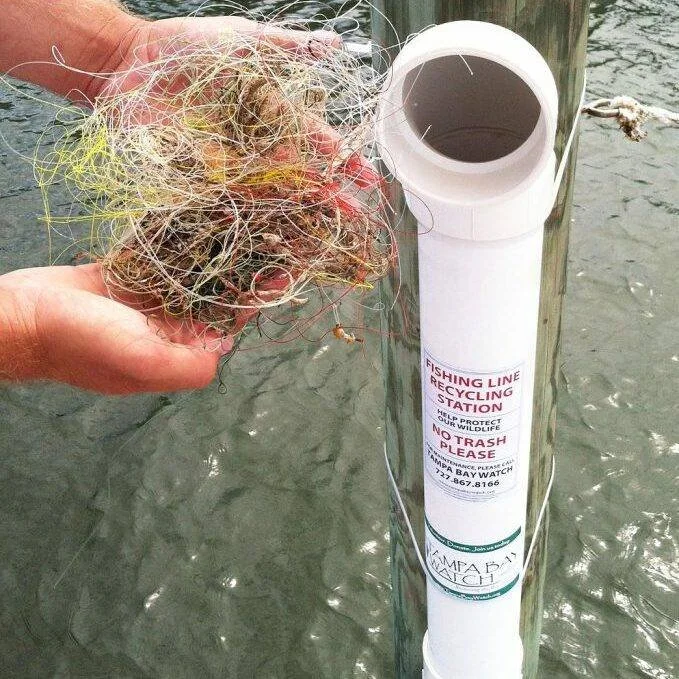
Monitor
Empty the monotube once a month

Report
Reports data to Tampa Bay Watch

Clean
Cleans the line at home or transports it to us

Recycle
Sends off cleaned line to Berkley Fishing Company for recycling
Report all entangled marine life to the FWC by calling 888-404-3922.
Questions? Email monotubes@tampabaywatch.org